Aluminium die-casting: the secret to producing lighter, more precise and more cost-effective components
Every industrial project presents a different challenge. The design of the part, the material chosen and the manufacturing process can make the difference between a competitive product and one with higher costs, longer production lead times or quality issues. That is why, at STAC Industry, we develop bespoke manufacturing solutions, working alongside our clients from the earliest stages of the project to select the technology best suited to each component.
Among the various manufacturing technologies, high-pressure die casting of aluminium (HPDC) has become one of the most widely used in industry. Its ability to produce complex, lightweight and strong components with high dimensional accuracy has made it the process of choice for sectors such as construction, the automotive industry, electronics and electric mobility. But what makes it the preferred choice for manufacturing millions of components every year?
From traditional foundry work to precision engineering
Casting is one of the oldest manufacturing processes in history. However, the advent of high-pressure injection moulding revolutionised the way metal components are manufactured, making it possible to produce parts with much greater precision, repeatability and efficiency.
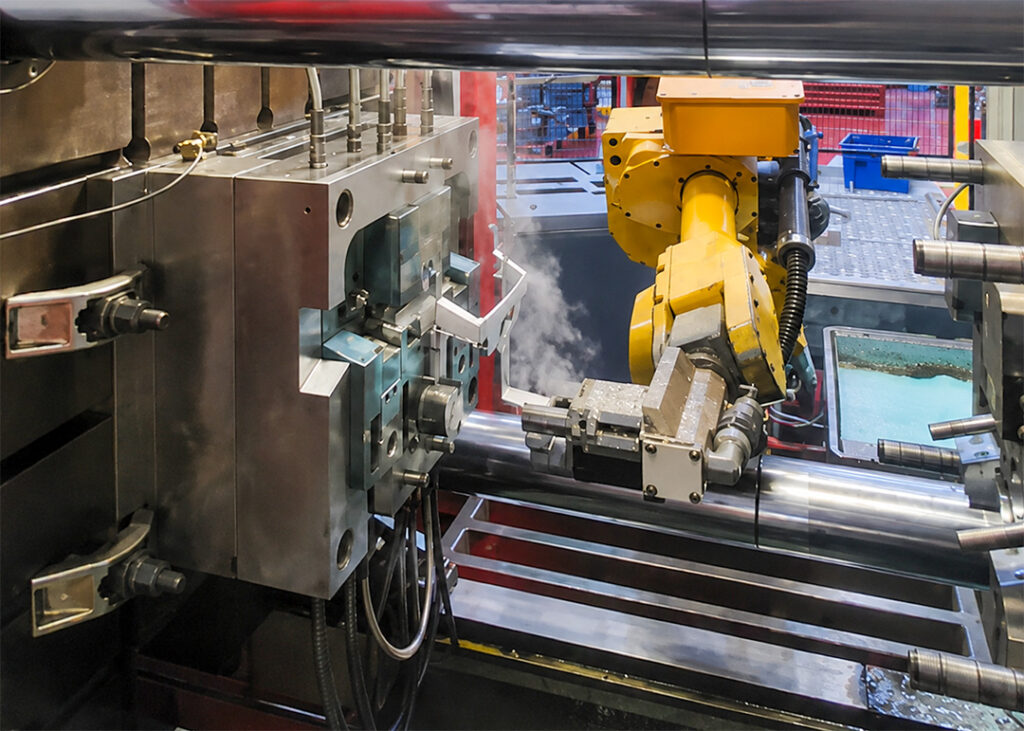
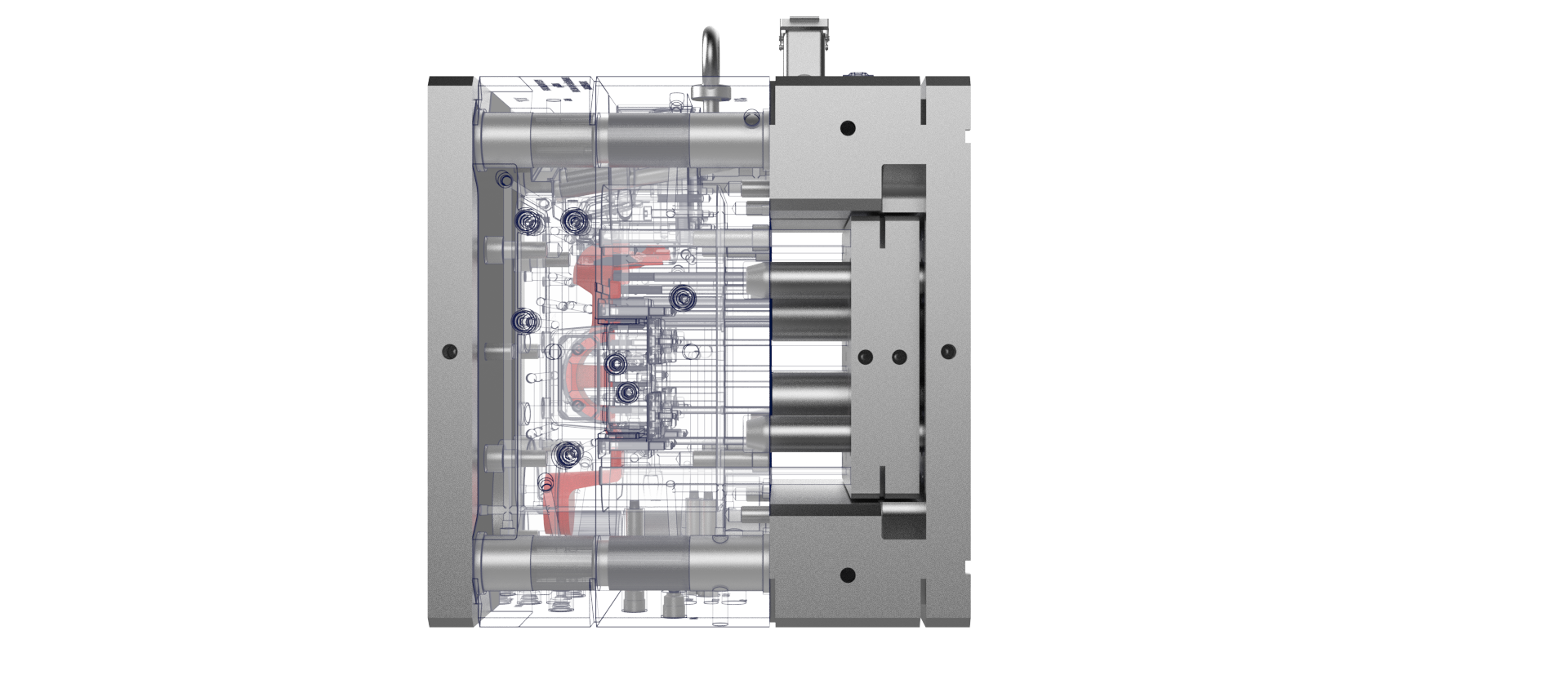
Nowadays, technology has taken this process to a whole new level. At STAC Industry, we use automated equipment, real-time monitoring systems and simulation tools that enable us to analyse how the aluminium will behave even before the mould is manufactured. This reduces development times, minimises risks and allows us to optimise every project from the outset.
The keys to producing top-quality parts
The quality of an aluminium component does not depend solely on the alloy used. The end result is determined by the control exercised over the entire manufacturing process. We therefore pay particular attention to five key aspects:
- Management of the first phase (slow phase): We strictly control the piston’s feed rate to generate a stable metal wave that expels the air from the injection chamber before the aluminium seals the inlets. An incorrect feed rate during this phase is responsible for up to 30 per cent of the air trapped in the final part.
- Dynamics in the second phase (rapid phase): As the cavity fills, the metal reaches flow velocities of between 20 and 60 m/s. We adjust the switch-over point with millimetre precision to activate the rapid phase just as the aluminium reaches the inlet gates, thereby minimising turbulence and premature cooling.
- Pressurisation for internal integrity: Once the cavity is full, we apply a pressurisation that reaches up to 1050 bar. This final ‘squeeze’ is vital for compressing the trapped gases and compensating for the volumetric contraction (internal shrinkage) that aluminium naturally undergoes during solidification.
- Advanced runner design and venting: We develop runners with tapering cross-sections (gradual reductions of 5 to 10 per cent) to maintain flow at a constant static pressure until it reaches the part. Furthermore, we position the vents and vacuum systems at the final filling points identified by CFD simulation to achieve maximum part density.
- The mould as a heat exchanger: Dimensional stability depends on a carefully controlled thermal map. We use separate cooling and heating circuits, monitoring the surface of the dies with thermal imaging cameras. This ensures the thermal homogeneity of the steel and the stability of the process, slowing down the onset of thermal fatigue (heat checking).
What are the advantages of the aluminium injection moulding process?
When the process is properly optimised, the aluminium injection moulding process offers significant advantages from both a technical and economic perspective. The main ones include:
- Exceptional strength-to-weight ratio: We produce lightweight yet highly robust components, capable of withstanding severe mechanical stresses.
- Dimensional accuracy: We are able to produce complex geometries with very tight tolerances (in the region of ± 0.10 mm), which drastically reduces or eliminates the need for secondary machining.
- Homogeneous microstructure: Rapid, controlled cooling produces a fine-grained, equiaxed structure that optimises the mechanical properties of the component.
- Added features and sustainability: Our die-cast aluminium dissipates heat efficiently (we use alloys with a thermal conductivity of up to 150 W/mK) and offers excellent resistance to corrosion thanks to the use of alloys with an extremely low iron and copper content. Furthermore, it is a 100% and infinitely recyclable material.
Why does aluminium die-casting continue to lead the industry?
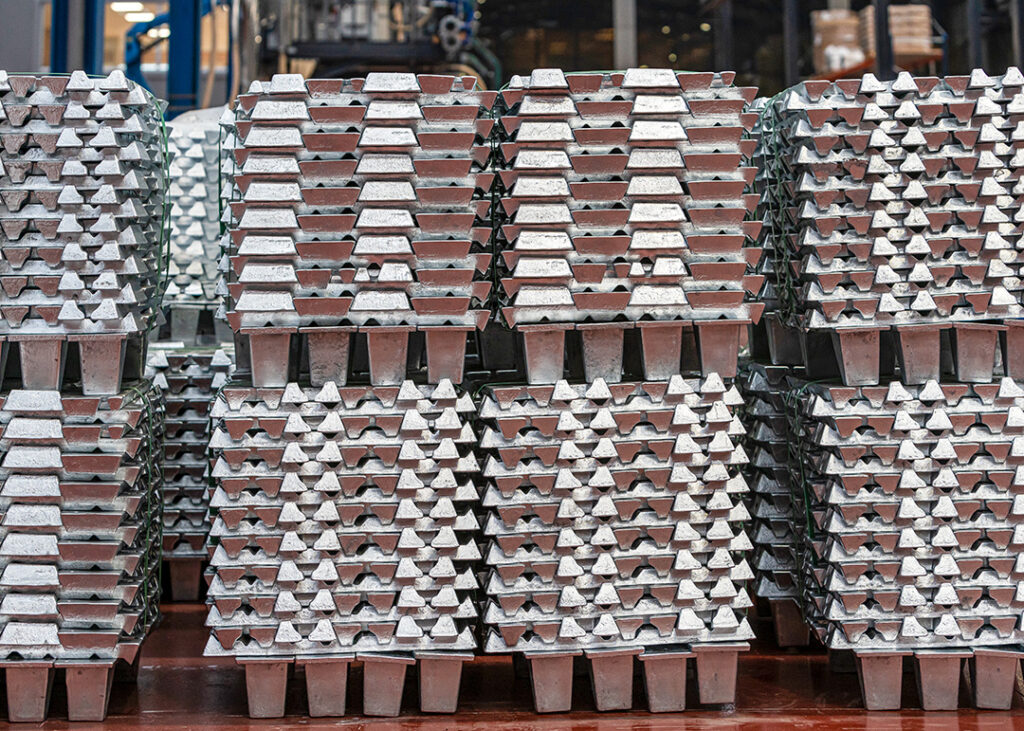
Aluminium die-casting remains the benchmark process because it combines productivity, precision and competitiveness in a way that few other industrial processes can. It enables the production of large volumes of complex components to a consistent standard of quality, whilst optimising production costs and reducing the need for subsequent operations.
Its versatility makes it an ideal solution for applications where precision, durability and efficiency are key factors.
STAC Industry: solutions tailored to each project
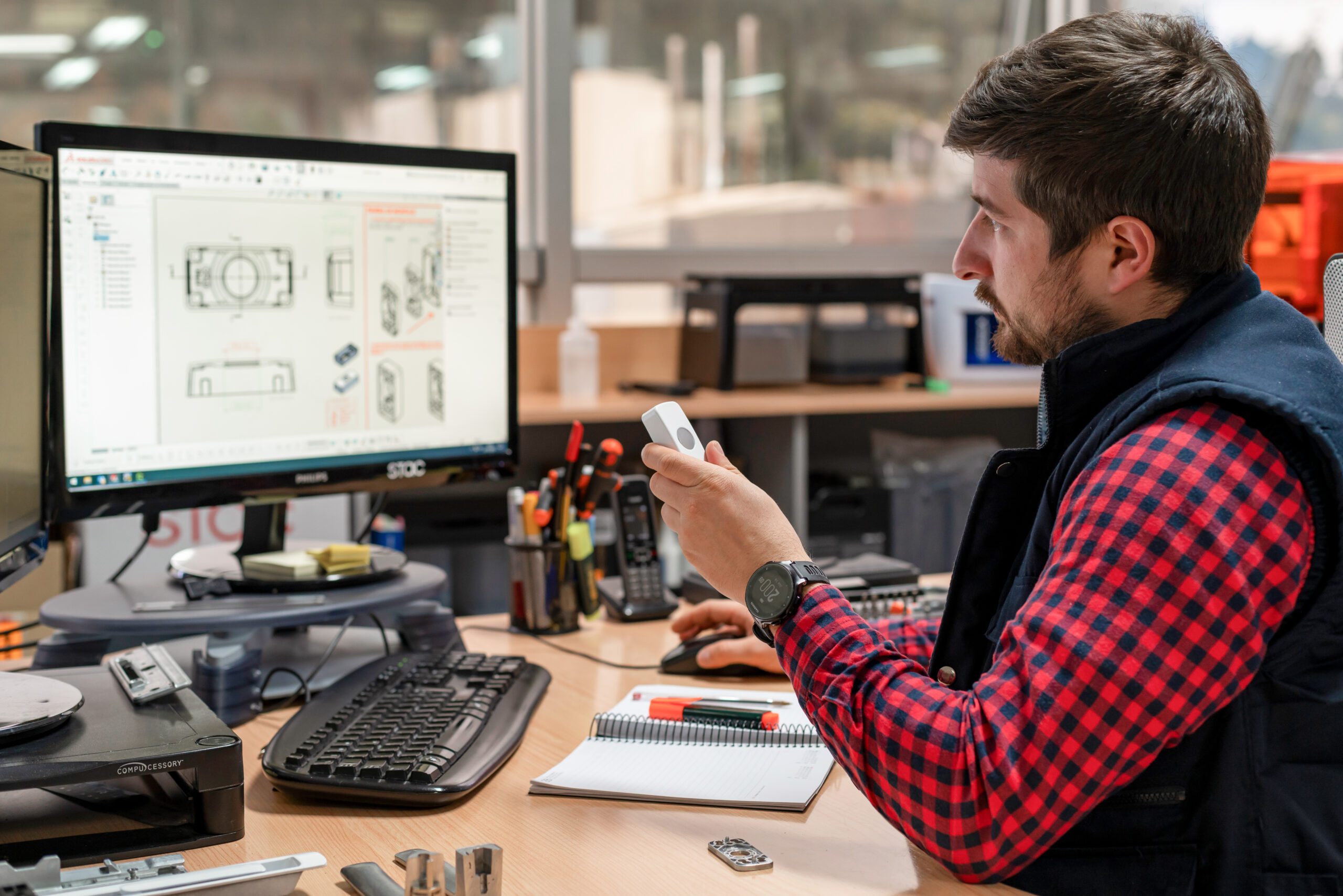
At STAC Industry, we don’t just manufacture parts; we work alongside our customers to find the best solution for each project. Our engineering team analyses the requirements of each component and works closely with the customer throughout the entire process, from the initial design right through to mass production, with the aim of optimising costs, improving quality and ensuring maximum reliability.
Whether you are developing a new part or wish to optimise an existing component, we offer you our knowledge and experience in aluminium die-casting. Contact our technical team and we will assess your project to provide you with the manufacturing solution that best suits your needs.

Contact us
We’ll be happy to provide help for your projects and resolve any doubts as soon as possible