All about zamak and die-casting: Is this the competitive edge your supply chain needs?
In large-scale manufacturing, the choice of material is not merely a technical detail; it is a critical decision that has a direct impact on your business’s profits. The current dilemma is clear: how can you achieve micrometre-level precision and a premium finish without operating costs affecting profitability?
The answer is rarely to be found in traditional aluminium or engineering plastics, which fail under prolonged stress. Zamak is now positioned as one of the sector’s most robust competitive solutions. It is not simply an alloy; it is a strategic resource for projects that demand total design freedom, a drastic reduction in secondary processes and a rapid return on investment. At STAC Industry, we analyse why zamak is the key component for your next project.
Zamak and HPDC: The high-productivity duo
High-pressure die casting (HPDC) is one of the most efficient production technologies in the industry; it is when zamak is used as the die-casting alloy that its advantages are further enhanced: it speeds up production and directly reduces the final cost.
- High production speed: For small, intricate parts, it is possible to achieve up to 1,000 cycles per hour. This output far exceeds that of plastic injection moulding and substantially improves cycle times for aluminium (usually between 80 and 120 cycles per hour).
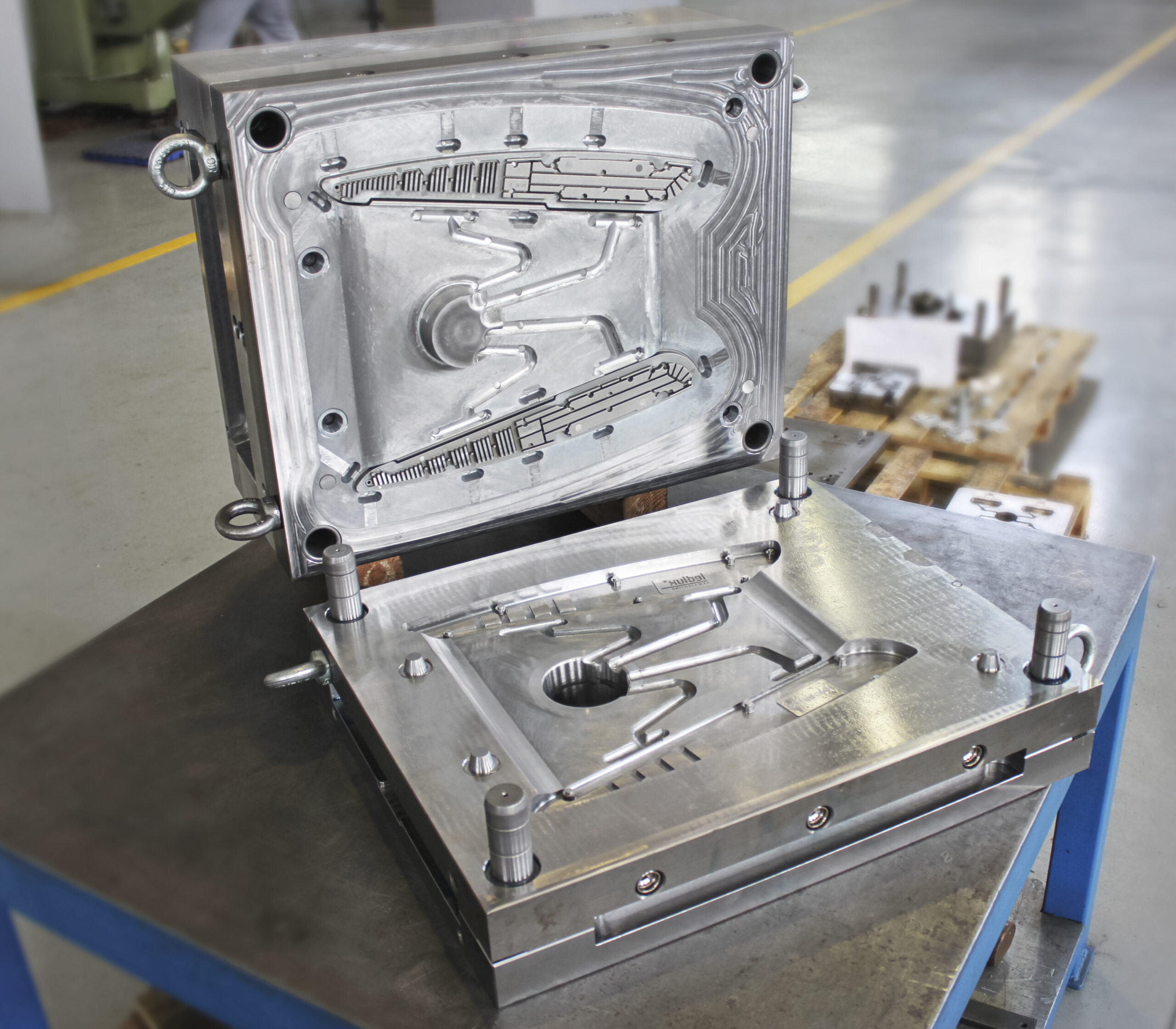
- Tool life: Due to zamak’s low melting point, the moulds are not subjected to the severe thermal shock that causes tool wear, unlike what happens with other alloys with a higher melting point, such as aluminium or magnesium. The result is that the moulds can withstand production runs of over a million parts.
- Ready-to-assemble components: Thanks to its exceptional fluidity, zamak allows components to be manufactured with tolerances of ±0.025 mm, thus producing parts that are ready for assembly without the need for subsequent processes such as machining, thereby cutting labour and machinery costs – factors that are often the hidden drain on profits.
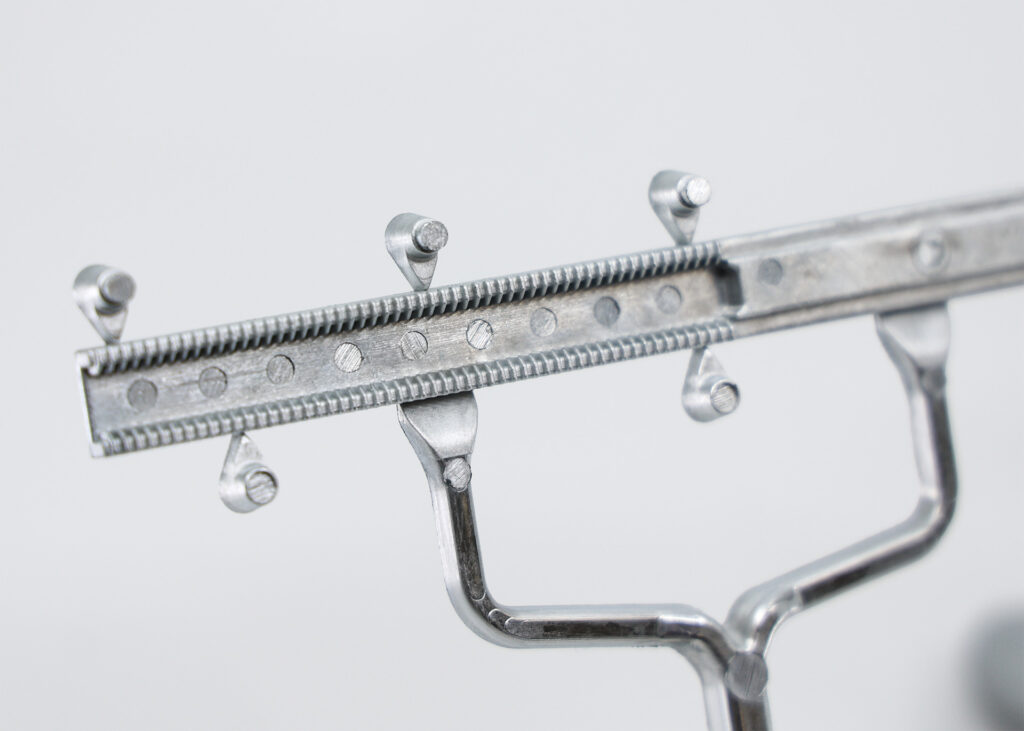
Technical expertise in complex geometries
The choice of material determines the limits of your design. Technical plastics (such as reinforced polyamide with glass fibre) are often evaluated as potential substitutes for metal, or it is automatically assumed that aluminium alloys are the only viable option.
If we look at the technical data, zamak breaks both myths:
| Mechanical properties | Zinc (Zamak 5) | Aluminium AlSi9Cu3 (EN AC-46000) | Magnesium AZ91D | Reinforced polyamide (with 30% fibreglass) |
| Tensile strength | 331 MPa | 324 MPa | 234 MPa | 79 – 210 MPa |
| Elastic limit | 228 MPa | 165 MPa | 159 MPa | N/A |
| Hardness (Elastic Modulus) | 85.5 GPa | 71 GPa | 44.8 GPa | 3.2 – 11 GPa |
| Hardness | 82 HB | 80 HB | 63 HB | 85 HRM |
Fully recyclable
The key argument in favour of zamak’s sustainability lies in its performance at the foundry itself: it requires half the energy to cast as aluminium and, at the end of its useful life, it can be 100% recycled whilst retaining its mechanical properties. Incorporating it into your designs is the quickest and most effective way to reduce the carbon footprint of your final product.
Optimise your project now
In industrial manufacturing, the materials you choose today determine your profit margin tomorrow.
The greatest savings are not made on the assembly line, but much earlier: 80 per cent of a part’s costs are determined during the early stages of its design. That is why the most costly mistake is to wait until you have a final drawing before you start thinking about the material.
At STAC Industry, we offer specialist technical advice and bespoke solutions for die-casting. We help you optimise processes, reduce costs and ensure the highest quality in every component. Contact us and find out how we can support you with your next project.

Contact us
We’ll be happy to provide help for your projects and resolve any doubts as soon as possible